
The Horserace Betting Levy Explained: Where Your Bet’s Margin Eventually Goes
 Available in US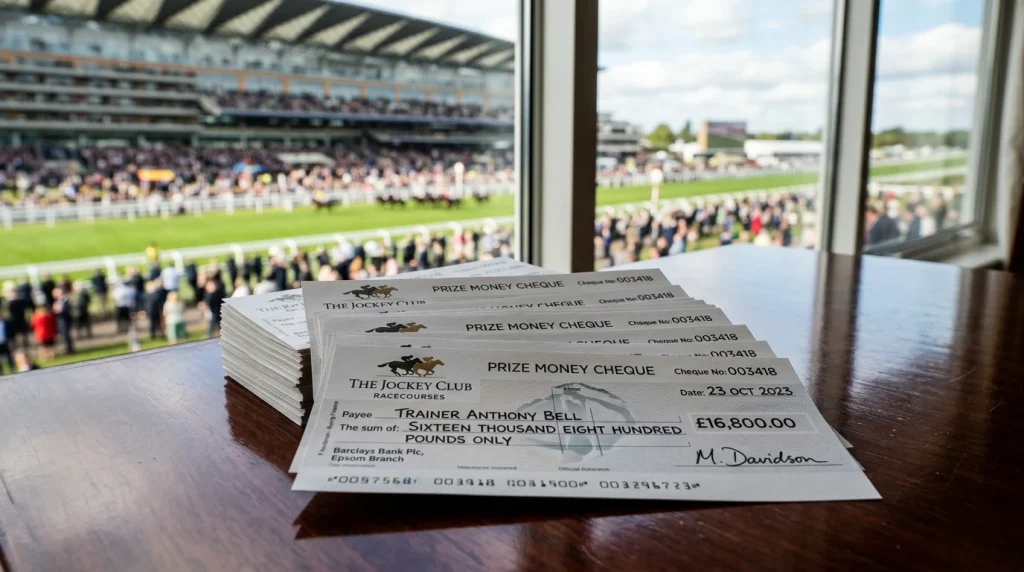
Contents
A 60-year-old funding mechanism, still central
Most punters have never heard of the horserace betting levy, and among those who have, few could explain how it works. That’s understandable – it operates entirely behind the scenes, invisible at the point of placing a bet, mentioned nowhere on the bet slip or the account statement. Yet this mechanism, created by the Betting Levy Act 1961 and overhauled several times since, is the single most important financial link between the betting industry and the sport of horse racing in the United Kingdom. Without it, the prize money you see advertised in race conditions, the veterinary care provided to racehorses, and the integrity operations that keep the sport clean would all look fundamentally different.
I started paying attention to the levy about five years into my betting career, when I realised that the quality of the product I was betting on – the racing itself – was directly dependent on a funding stream I’d never thought about. The levy isn’t an abstract policy debate. It’s the reason a mid-tier handicap at Kempton can offer a prize fund that justifies trainers entering their best horses, which in turn produces a competitive field worth analysing and betting on.
How the 10% levy is calculated
The levy is charged at a flat rate of 10% on bookmakers’ gross profits from bets on British horse racing. Gross profit, in this context, means the total stakes received minus the winnings paid out – what the industry calls gross gambling yield, or GGY. If a bookmaker takes £1 million in stakes on British racing in a given period and pays out £900,000 in winnings, their gross profit is £100,000, and the levy due is £10,000.
The charge applies to all bookmakers offering bets on British racing, including offshore operators that accept bets from UK customers. This was a significant change introduced in 2017, when the levy was extended beyond operators physically located in the UK to cover the remote sector. Before that extension, offshore operators could accept bets on British racing without contributing to the sport’s funding – a loophole that became increasingly untenable as online betting grew to dominate the market.
The levy applies only to bets on racing in Great Britain. Bets on Irish, French, or other international racing are not included, even when placed with UK-licensed operators. This distinction matters for punters who bet across multiple jurisdictions, because it means that the economics of the bookmaker’s British racing product are shaped by a cost that doesn’t apply to their international racing markets.
What the HBLB actually funds
The Horserace Betting Levy Board collects the levy income and distributes it across several categories that sustain the sport. Prize money is the largest single category, receiving roughly 60-65% of total disbursements in a typical year. The levy supplements prize money funded directly by racecourses and owners, and without it, many fixtures would offer prize levels too low to attract competitive fields.
Integrity services receive the second-largest allocation. This covers the work of the BHA’s integrity department, which monitors betting patterns for signs of corruption, investigates suspicious results, and enforces the rules of racing. The integrity function is funded partly by the levy because the betting market itself creates the incentive structure that corruption exploits – the levy is, in effect, the betting industry paying for the policing of its own market.
Veterinary science and equine welfare receive a smaller but critical share. Levy-funded research has contributed to advances in racehorse welfare, injury prevention, and post-career rehabilitation. Breed improvement programmes, racecourse infrastructure maintenance, and training grants for stable staff are also partly levy-funded.
The breadth of the levy’s reach means that it touches almost every aspect of the sport. A punter studying the racecard at a Saturday meeting is, in a tangible sense, looking at a product whose quality has been shaped by levy funding – from the prize money that attracted the runners, to the integrity checks that ensure the competition is genuine, to the veterinary standards that keep the horses sound enough to race.
Recent income figures and the 2026-26 forecast
Levy income reached a record of approximately £109 million in the 2026-2026 financial year, marking the fourth consecutive year of growth. That headline figure reflects the overall health of the betting market on British racing during the period, boosted in particular by strong bookmaker results at the Cheltenham Festival, where high-profile favourite defeats delivered above-average margins for the industry.
The record income might suggest comfortable finances, but the picture is more complex. The HBLB’s forecast for the 2026-2026 financial year projects levy income of £103 million – a decline from the record year, implying an operational gap between projected income and the commitments already budgeted. The gap reflects a combination of factors: declining betting turnover on British racing, the continued impact of affordability checks on high-staking customers, and the structural uncertainty created by the tax reform debate.
The tension between record levy income and a declining turnover base is not a contradiction. Levy income is driven by bookmaker gross profit, not by turnover. In years when results favour the bookmaker – when heavily backed horses lose – levy income rises even if fewer bets are being placed. Conversely, a year of punter-friendly results can depress levy income even if turnover holds steady. This volatility means that the levy is a less predictable funding source than its statutory status might suggest, and the HBLB must plan for fluctuations that are largely determined by the results of individual races at major festivals.
The 2026 review and the BHA’s response
The government concluded a three-year review of the levy in March 2026 and confirmed that the rate would remain at 10%. The BHA had lobbied hard for an increase, presenting evidence that the gap between racing’s costs and the return it receives from betting has widened steadily. The decision to hold the rate was framed as providing stability and certainty to the gambling sector – language that the racing industry interpreted as prioritising the interests of betting operators over the sport they profit from.
The BHA’s chief executive Brant Dunshea expressed the industry’s frustration publicly, noting that the three-year review process had consumed significant time and resources only to conclude with no change. The racing industry’s argument was straightforward: costs have risen, field sizes are declining, the horse population is shrinking, and the levy rate has not been adjusted to reflect these pressures. The government’s counter-argument – that stability benefits the broader gambling sector, which in turn benefits racing through sustained betting activity – was unconvincing to an industry watching its financial position erode.
For punters, the levy review matters because its outcome shapes the medium-term trajectory of the sport. If the levy fails to keep pace with rising costs, the most likely consequences are reduced prize money for lower-tier fixtures, fewer competitive fields, and a gradual hollowing-out of the everyday racing calendar that provides the majority of UK betting opportunities. The major festivals will be protected, but the Tuesday meetings and midweek cards that sustain year-round betting activity may suffer.
Levy FAQ
Articles
Prepared by the bethorseracingonline.com editorial staff.
