
Betting on Horse Racing Online in the UK: The Complete 2026 Guide
 Available in US
Data-driven insights for smarter racing bets.
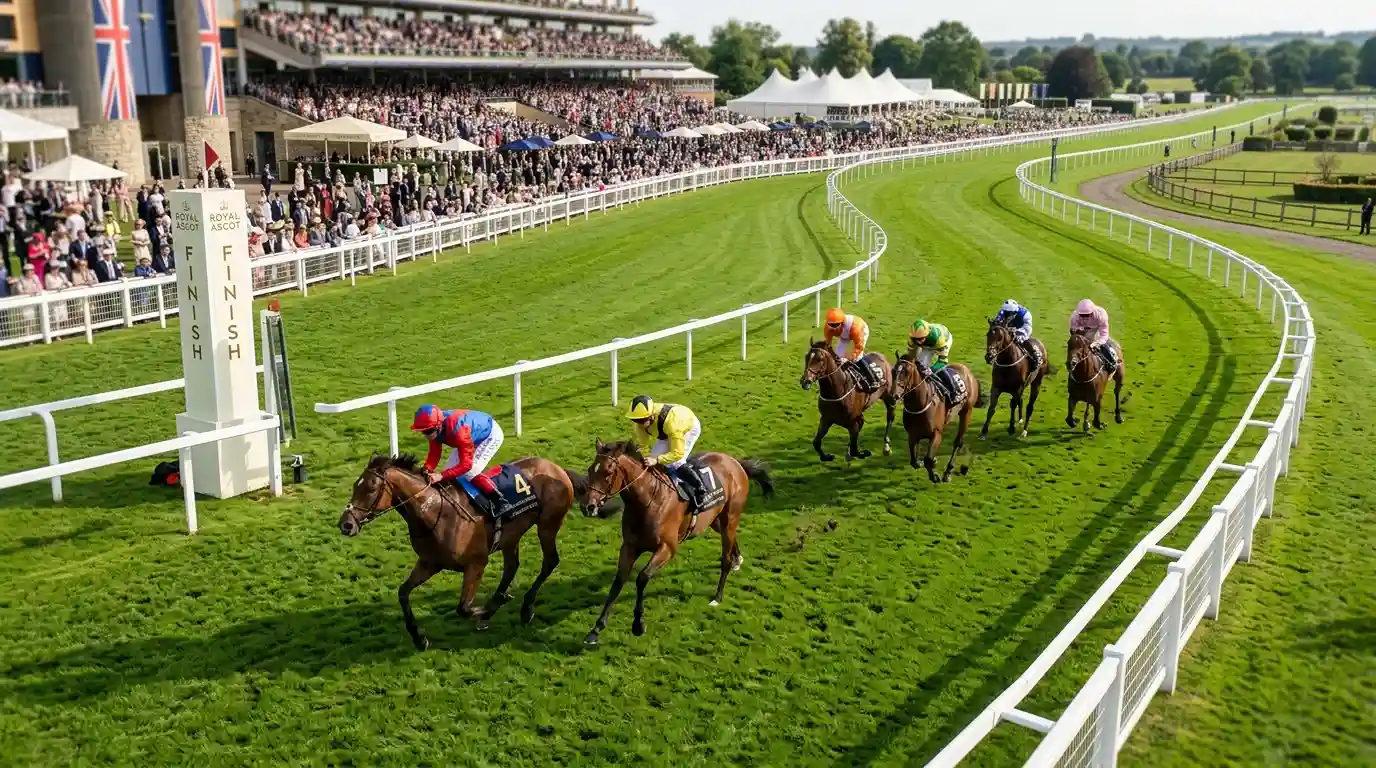
The essential numbers and actions for UK racing bettors
- UK horse racing generated 766.7 million pounds in remote betting GGY in 2024–2025, but online turnover dropped 1.6 billion pounds in two years — operators will pass tighter margins to punters through odds and promotions.
- Visits to unlicensed betting sites from UK users surged 522% in three years. Verify your operator's UKGC licence before depositing.
- Affordability checks now affect nearly one in four surveyed punters. Understand the thresholds before they apply to your account.
- Remote Gaming Duty nearly doubles to 40% from April 2026. Expect leaner promotions and tighter odds.
- Process beats impulse: convert odds to implied probability, compare prices, set deposit limits and follow a pre-bet checklist.
The state of UK online horse racing betting in 2026
I placed my first online horse racing bet in 2017, on a soggy Tuesday at Catterick. The horse finished fourth, I lost eight quid, and I was hooked — not on the losing, but on the puzzle. Nine years later, the UK horse racing betting industry turns over billions annually, employs tens of thousands, and operates under a regulatory framework being rewritten in real time. Yet most guides to online racing bets read like they were stamped out of the same affiliate template in 2019. That is not what this guide is.
The UK horse and sports betting sector is worth an estimated 3.7 billion pounds in 2026. Horse racing alone generated 766.7 million pounds in gross gambling yield from remote betting in the twelve months to March 2025 — second only to football. Those numbers sound healthy until you look at the direction of travel: online turnover on racing fell by 1.6 billion pounds in just two years to March 2024, and the first nine months of 2025 showed a further 4.2% decline. Something is shifting, and anyone betting on horses needs to understand what.
This guide is built around data from the Gambling Commission, the BHA and the Levy Board — not promotional copy. Before we dig into the mechanics, here is a snapshot of what matters most.
The UK horse racing betting market by the numbers
Numbers without context are just decoration. So let me frame the picture: horse racing is the second-largest spectator sport in Britain after football, directly generating over 1.47 billion pounds in revenue and supporting roughly 85,000 jobs. This is not a niche hobby.
766.7m pounds
Gross gambling yield from remote horse racing bets, April 2024 — March 2025
3.7bn pounds
Total UK horse and sports betting industry value in 2026
2.6bn pounds
Total remote betting GGY across all sports, 2024–2025
Those top-line numbers mask a more complicated story. The first quarter of 2025 saw a 9% drop in betting turnover on British racing compared to the same period in 2024, and over nine months the cumulative decline was 4.2% against 2024 and a sharper 12.8% against 2023. The Levy Board's income hit a record 109 million pounds for 2024–2025 — the fourth consecutive year of growth — but that reflects bookmaker margins rather than raw volume. When fewer pounds are wagered but the house keeps more of each one, the headline masks the underlying erosion.
Football dominates remote betting GGY at 1.3 billion pounds — nearly double horse racing's share. Yet racing still drives the second-largest slice of UK sports betting revenue, ahead of every other sport combined.
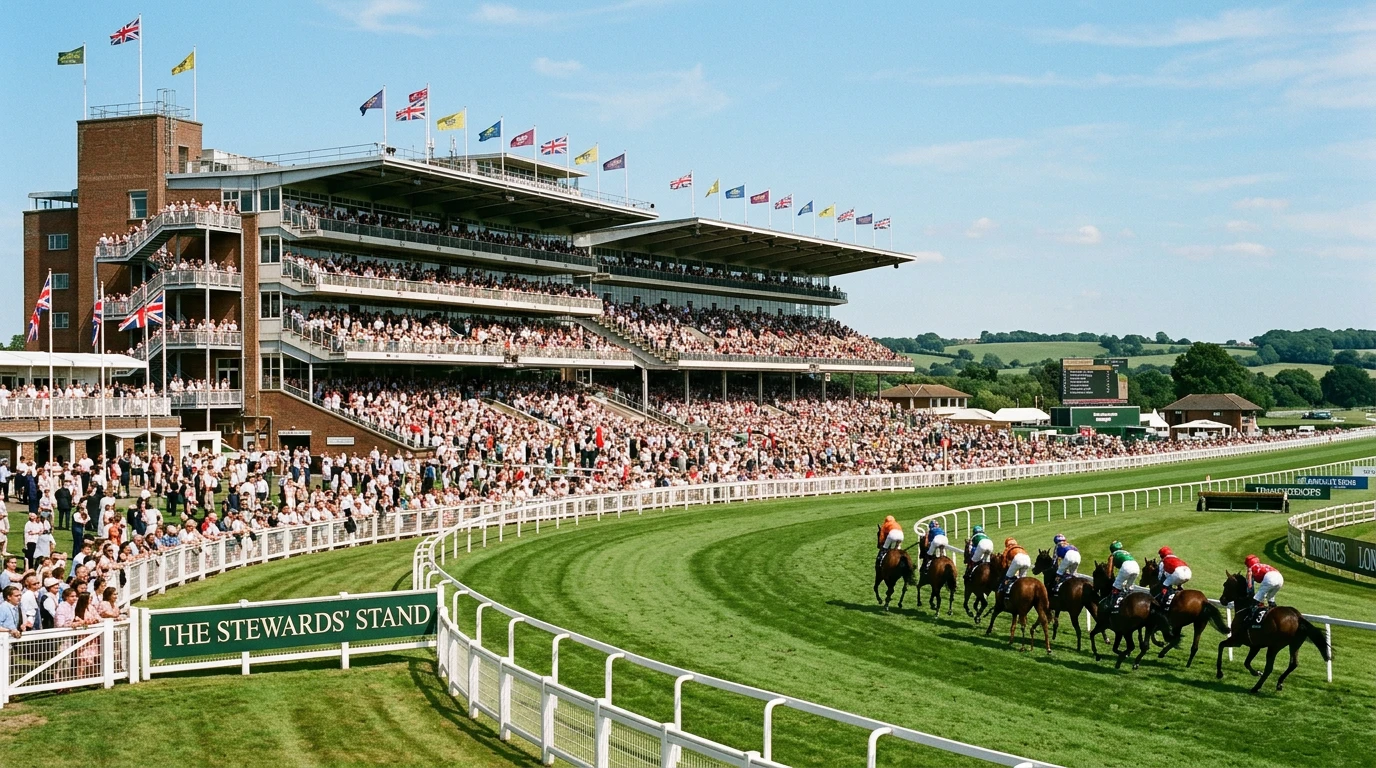
The Premier/Core split tells its own story. Average turnover per race at Premier meetings rose 2.7% in 2025, while Core fixtures fell 8.6%. Punters are concentrating spending on events that matter to them — a trend that shapes everything from prize money allocation to operator strategy.
Is online horse racing betting legal in the UK?
I get asked this more than you would expect — usually by people who have been betting for years and suddenly wonder whether tightening regulation means they are doing something wrong. The short answer: yes, online horse racing betting is fully legal in the UK for anyone aged eighteen or over, provided you use an operator licensed by the UK Gambling Commission. That has been the case since the Gambling Act 2005.
The UK Gambling Commission issues operating licences and personal licences. Every operator that offers betting to UK customers must hold a remote operating licence. You can verify any bookmaker's licence status on the UKGC's public register in seconds.
What has changed — and what generates the confusion — is the intensity of regulation around how operators manage their customers. The Gambling Act Review introduced tighter identity verification, financial risk assessments, mandatory affordability checks at certain thresholds, and expanded self-exclusion tools. These measures do not restrict your right to bet. They restrict how operators interact with you, and in some cases they create friction that feels like a restriction. The government allocated 26 million pounds in the Autumn Budget 2025 specifically for the Gambling Commission to tackle unlicensed operators, and Al Murray MP, speaking on behalf of the Gambling Minister, affirmed that the government wants to provide stability and certainty to the gambling sector. On the tax side, Remote Gaming Duty rises from 21% to 40% from April 2026, while General Betting Duty increases from 15% to 25% from April 2027 — though horse racing has been explicitly exempted from the GBD rise, remaining at 15%. That exemption matters because it means horse racing betting carries a lower effective tax burden than casino-style gambling.
Key distinction: Betting on horse racing is legal. Using an unlicensed operator strips you of every consumer protection the UKGC provides. The legal status of your bet depends on who you place it with.
How horse racing odds work: fractions, decimals, implied probability
The first time I tried to explain fractional odds to a friend from Germany, I realised how deeply weird the British system is. "So 11/4 means if you bet four pounds you win eleven?" Yes, plus your stake back. "Why not just say 3.75?" Because we have been doing it this way since the eighteenth century.
UK horse racing odds come in three formats, and understanding all three gives you a genuine edge — not because the maths is difficult, but because most punters never bother to do it.
Fractional odds — the traditional UK format, expressed as a ratio (e.g. 5/1, 11/4, 6/4). The first number is your potential profit; the second is the stake required to earn it.
Decimal odds — the exchange and European standard (e.g. 6.00, 3.75, 2.50). This figure represents the total return per pound staked, including the original stake.
Converting is straightforward: take fractional odds of 11/4, divide 11 by 4 to get 2.75, add 1 for the stake — decimal odds 3.75. The third layer — implied probability — is where the real insight lives. Divide 1 by the decimal odds, multiply by 100. A horse at 3.75 has an implied probability of 26.7%. An even-money favourite (decimal 2.00) sits at 50%.
Example: converting 9/2 to implied probability
Step 1: Convert to decimal. 9 divided by 2 = 4.5. Add 1 = 5.50.
Step 2: Calculate implied probability. 1 divided by 5.50 = 0.1818. Multiply by 100 = 18.2%.
Step 3: Interpret. The market prices this horse at roughly an 18% chance of winning. If your own assessment says the true probability is 25%, that is a value bet — the price overstates the risk.
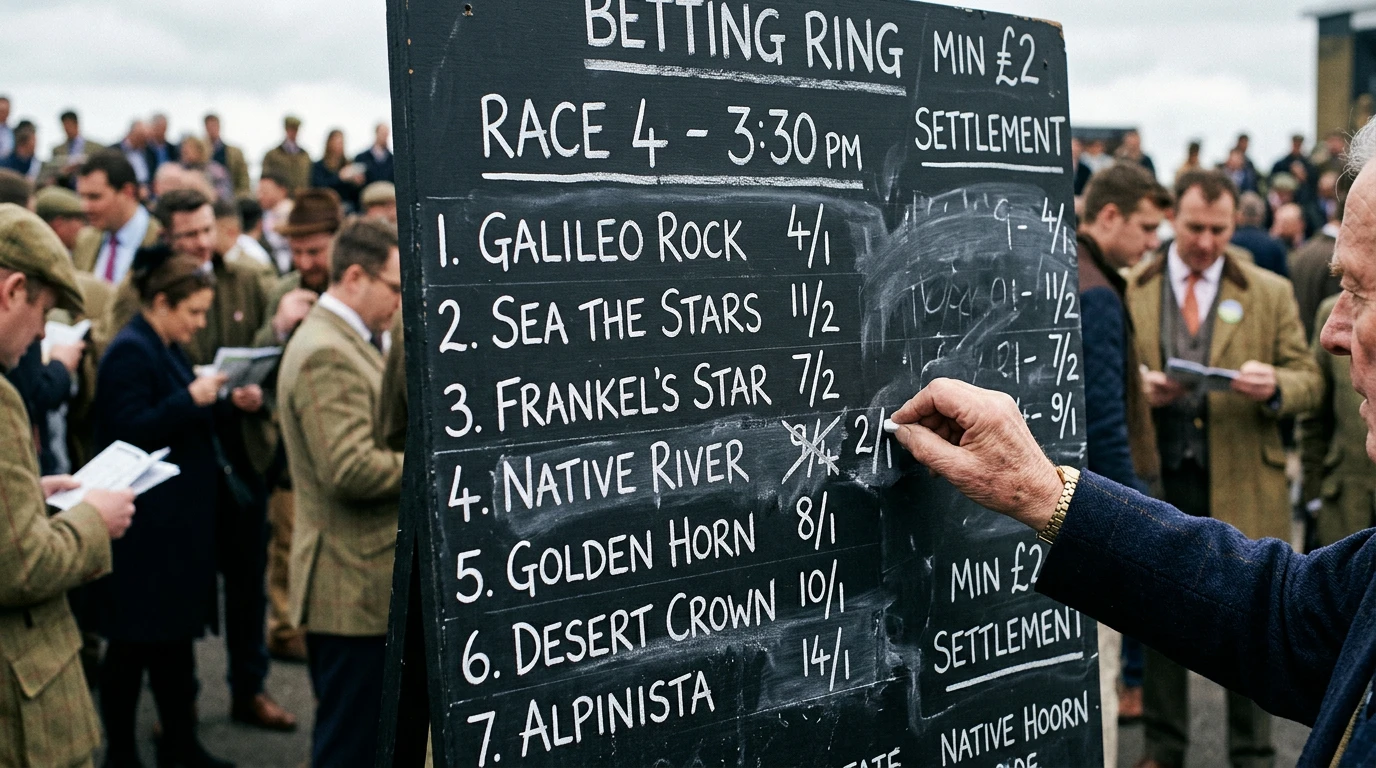
Why does this matter? Because win bets account for 36% of the horse racing market, each-way takes 22%, and forecast/tricast combinations make up 17%. Every bet starts with a price, and every price embeds an implied probability. If you cannot convert one to the other, you are placing bets based on what numbers look like rather than what they mean. For a deeper dive into Starting Price, overrounds and price movement, I have written a dedicated breakdown of UK horse racing odds.
Quick reference: common UK odds conversions
| Fractional | Decimal | Implied probability |
|---|---|---|
| 1/1 (evens) | 2.00 | 50.0% |
| 2/1 | 3.00 | 33.3% |
| 5/1 | 6.00 | 16.7% |
| 10/1 | 11.00 | 9.1% |
| 11/4 | 3.75 | 26.7% |
| 6/4 | 2.50 | 40.0% |
The core bet types in UK horse racing
Walk into any betting shop on a Saturday and you will hear the same words: win, place, each-way, acca, forecast. That vocabulary covers roughly 90% of what punters do, but the simplicity of the labels disguises meaningful differences in risk, return and strategic purpose.
Win bet — the simplest wager. You back a horse to finish first. If it does, you collect at the quoted odds. If it finishes second or worse, you lose your stake. Win bets represent 36% of the horse racing betting market.
Place bet — you back a horse to finish in the places, typically the top two, three or four depending on the number of runners and the type of race. Place odds are a fraction of the win price.
Beyond singles, the landscape branches quickly. Doubles and trebles link two or three selections — all must win. Accumulators chain four or more, with the return rolling forward. The appeal is obvious: small stakes, large payouts. The catch is equally obvious — one loser kills the bet. Multiple bets make up about 10% of the market, which tells you something about the gap between their allure and their actual hit rate. Forecast bets ask you to predict the first two in exact order (or either order in a reverse forecast), tricasts extend this to the first three, and together they account for 17% of the market. I use them sparingly — the overround is brutal — but in a 20-runner Saturday handicap, the dividends can be genuinely rewarding.
| Bet type | Selections needed | Risk level | Typical use case |
|---|---|---|---|
| Win | 1 | Medium | Strong opinion on one horse |
| Each-way | 1 (two bets) | Lower | Fancied outsider in a big field |
| Double / Treble | 2–3 | High | Linking strong fancies across cards |
| Accumulator | 4+ | Very high | Small-stake, high-return shot |
| Forecast / Tricast | 2–3 (ordered) | Very high | Competitive handicaps, big fields |
Single bets — win and each-way — dominate the market at over 70% of volume. Singles allow precise bankroll management and avoid the compounding of bookmaker margins that multiples introduce.
Each-way: why it dominates UK punting
If there is one bet type that defines British racing culture, it is the each-way — the default setting for casual and serious punters alike, accounting for 22% of all horse racing bets placed in the UK.
An each-way bet is two bets in one: a win part and a place part, at equal stakes. If you put ten pounds each-way on a horse at 10/1 in a sixteen-runner handicap, you are staking twenty pounds total. If the horse wins, both parts pay. If it places (typically top four in handicaps of sixteen or more runners), only the place part pays at a fraction of the win odds — usually one-quarter or one-fifth.
Example: 10 pounds each-way at 10/1, 1/4 place terms, horse finishes third
Win part: loses. You forfeit 10 pounds.
Place part: pays at 10/1 divided by 4 = 5/2. Return: 10 pounds x 2.5 = 25 pounds profit, plus your 10-pound stake back = 35 pounds.
Net position: 35 pounds returned minus 20 pounds staked = 15 pounds profit.
Each-way cushions the downside on longshots. At short prices it is often poor value — backing a 2/1 shot each-way means the place part pays at 1/2, barely covering the additional stake. Each-way comes alive in big-field handicaps where double-figure prices are common and place terms are generous.
For place terms, field-size decisions and the break-even maths, I have put together a practical guide to each-way betting on UK horse racing with worked examples at various price points.
What to look for in a UK horse racing betting site
A colleague once told me he chose his main bookmaker because the app icon was green and he liked the colour. His selection method was no worse than most punters' — barely considered at all. The choice of betting platform directly affects your returns, your experience and your exposure to risk.
Start with the licence. Every operator serving UK customers must hold a UKGC remote operating licence. No licence, no protections, no ADR route if something goes wrong. Beyond that, odds quality varies more than most punters realise. The same horse in the same race can be 5/1 with one operator and 9/2 with another — a difference that compounds over hundreds of bets. Getting into the habit of checking two or three prices before placing a bet is the single easiest way to improve your results.
Do
- Verify UKGC licence status before depositing
- Compare odds across at least two platforms for every bet
- Check whether Best Odds Guaranteed applies to your race
- Set deposit and loss limits before you start betting
- Use an operator that offers live streaming of the races you bet on
Don't
- Choose a platform based solely on the welcome offer
- Ignore the terms and conditions on free-bet promotions
- Assume all operators stream the same meetings
- Deposit more than you can afford to lose in a single session
- Rely on a single bookmaker for all your racing bets
Streaming rights are not universal. Some operators cover every UK and Irish fixture; others stream only a subset. With 95% of UK online gambling taking place at home, the 18–24 age group leading mobile usage at 76%, and around 290 million online bets placed monthly across UK sports, the quality of the mobile experience is the primary interface for most punters.
| Feature | Why it matters for racing | What to check |
|---|---|---|
| Best Odds Guaranteed | Protects you if SP exceeds your fixed price | Timing window and race coverage |
| Live streaming | Watch races in-app; essential for in-play | Number of UK/Irish meetings covered |
| Cash-out availability | Lock in profit or limit loss before the result | Whether it covers each-way and multiples |
| Ante-post markets | Access to early prices on major festivals | Range of races and NRNB terms |
| Mobile app quality | Speed and usability for live betting | Biometric login, bet-placement flow, streaming lag |
Best Odds Guaranteed, NRNB and the offers that matter
Most promotional offers in the betting world are marketing theatre — free-bet bonuses with five-times wagering requirements, "enhanced" odds on pre-selected selections, loyalty schemes that reward volume over skill. But a small number of promotions offer real, quantifiable benefit, and Best Odds Guaranteed sits at the top.
Best Odds Guaranteed (BOG): if you take an early fixed price and the Starting Price at the off is higher, you are paid at the better price. It costs nothing, activates automatically, and most major UK-licensed operators offer it on domestic racing.
The catch is in the details. BOG timing windows vary — some operators guarantee prices from 8 a.m. on race day, others from overnight declarations, a few from the evening before. February and March 2025 saw bookmakers' gross profits well above recent norms, with March reflecting bookmaker-friendly results at Cheltenham. Said Delmonte of the Levy Board observed that this was not the first time Cheltenham had significantly impacted yield — a reflection of the sport's essential unpredictability. When the big meetings go against punters, BOG becomes irrelevant; when they go in your favour, it amplifies the return at no cost.
Non-Runner No Bet (NRNB) is the second promotion that genuinely protects your position. Standard ante-post rules mean you lose your stake if your horse does not run. NRNB markets, typically offered on major festival races, refund your stake on withdrawal. The trade-off is marginally shorter prices, but the insurance is worth it in National Hunt racing where injuries make non-runners a fact of life. Faller insurance, beaten-by-a-nose money-back and extra-places promotions round out the useful offers — each returning value in specific circumstances. For the full breakdown of BOG timing windows and how to integrate these promotions into a strategy, I have written a detailed guide to Best Odds Guaranteed on UK horse racing.
At the Cheltenham Festival, BOG payouts from a single major operator have exceeded 50 million pounds in a single week — a figure that tells you how much the promotion is worth to punters who back early and benefit from SP drift.
Mobile apps and live streaming: betting on the go
Three years ago I tried placing a bet at Newbury using a bookmaker app that took fourteen seconds to load the bet slip. App quality is not a luxury feature. For the majority of UK punters, the app is the bookmaker.
95%
Share of UK online gambling that takes place from home
76%
Proportion of 18–24 year-olds who gamble via mobile
17%
Year-on-year growth in online horse racing betting in 2024
The mobile-first shift has been comprehensive. Most UK-licensed operators now offer feature parity between desktop and app: full racing cards, live odds, cash-out, bet builders and account management. The differentiators sit in the details — biometric login speed, bet-placement flow and, critically, live streaming quality.
ITV signed a four-year deal for exclusive free-to-air coverage of top-tier racing from 2027 to 2030, guaranteeing broad access to the biggest meetings. For fixtures outside the ITV window, bookmaker apps are your only option for watching live from home. Some stream every UK and Irish fixture; others cover a subset. Streaming typically requires a funded account or a bet on the relevant meeting.
A two-second delay on a live feed makes in-running betting genuinely risky — you are reacting to action the bookmaker's algorithm has already priced. Mobile betting shines for pre-race wagers; for live in-running punting, the latency gap is a structural disadvantage no app can fully overcome.
Affordability checks: what they are and how they affect you
No topic in UK racing provokes more anger, more confusion and more unintended consequences than affordability checks. I have spoken to punters locked out of their accounts for weeks while waiting for document verification, and to industry executives who believe the framework is driving customers toward unlicensed operators. Both sides have evidence.
An affordability check is a financial risk assessment that licensed operators must carry out when spending exceeds certain thresholds. Light-touch checks use publicly available data and soft credit information. Enhanced checks, triggered at higher thresholds, may require payslips, bank statements or tax returns.
The scale: The share of respondents in the Racing Post's Big Punting Survey who reported undergoing an affordability check rose from 16.6% in 2023 to 23.7% in 2025. Among those asked to provide financial documents, 61% refused.
The BHA has modelled the potential damage: implementation in the proposed form would cost the betting industry 900 million pounds a year and strip 250 million pounds from British horse racing over the first five years. Nevin Truesdale, the former Jockey Club chief executive, argued that the blanket checks do not have any discernible impact on problem gambling levels, but there is significant evidence to show they impact the growth of the black market and have put a significant hole in racing's finances.
Affordability checks are not the same as identity checks. Identity verification confirms you are who you say you are. Affordability checks assess whether you can financially sustain your betting activity. The former is universally accepted; the latter is the subject of intense debate.
For casual punters staking modest amounts, affordability checks are unlikely to intrude — thresholds sit well above recreational spending. But for anyone whose activity crosses into the hundreds of pounds per month, being asked to document your income is a real possibility. Among high-stakes punters wagering a thousand pounds or more per bet, roughly one in three now reports using unlicensed bookmakers — a direct consequence of a regulatory mechanism that has made the legal market harder to access for precisely the customers who generate the most revenue.
The black-market risk and why UKGC licensing matters
Here is a number that should stop every UK punter: visits to 22 unlicensed bookmaker websites from UK-based users grew by 522% between August 2021 and September 2024. Over the same period, visits to the ten largest licensed operators grew by just 49%.
Scale of the issue: Between January and September 2024, unlicensed sites received over 600,000 unique visits per month from UK users. The BHA warned from the outset of the Gambling Act Review that well-meaning policy decisions risked inadvertently growing illegal market activity.
An unlicensed operator offers none of the UKGC protections: no segregated customer funds, no ADR route for disputes, no mandatory responsible-gambling tools, no requirement to honour advertised odds.
The government allocated 26 million pounds in the Autumn Budget 2025 to tackle the unlicensed sector. An open letter from over 400 racing industry leaders warned that adding further regulation would be at best a grave misjudgement and at worst a gift to the criminal underworld. The practical lesson: before you deposit a penny, check the UKGC licence register. If the operator does not appear, walk away.
Responsible gambling: tools, limits and where to get help
I am going to write something most betting guides treat as an afterthought. Responsible gambling is not a moral lecture. It is a set of practical tools that exist to keep your betting sustainable, and knowing how to use them is as much a part of good punting as knowing how to read a race card.
Every UKGC-licensed operator must offer deposit limits, loss limits, session time limits, reality checks and self-exclusion options. These are regulatory requirements, not suggestions buried in a settings menu. The problem is that most punters never activate them.
Do
- Set a deposit limit before your first bet — you can always raise it later with a cooling-off period
- Use reality-check reminders to track how long your sessions last
- Review your betting history monthly to spot patterns you might not notice in real time
- Know how to self-exclude through GAMSTOP if you need a complete break
Don't
- Chase losses by increasing stakes after a bad run — the maths works against you
- Bet under the influence of alcohol, frustration or emotional impulse
- Treat gambling as a source of income rather than entertainment with a cost
- Ignore the early signs: spending more than planned, betting on races you have not studied, hiding activity from family

The gender split in UK sports betting is stark — 15% of men participate compared to 4% of women — but problem gambling does not respect demographics. If you recognise yourself in any of the warning signs above, the National Gambling Helpline (0808 8020 133) provides free, confidential support. GamCare and GAMSTOP offer self-exclusion across all UKGC-licensed operators simultaneously.
Self-exclusion: GAMSTOP registration covers all UKGC-licensed online operators for six months, one year or five years. It cannot be reversed during the chosen period.
I include this section prominently because I have seen sharp punters lose control — not through recklessness, but because they did not set boundaries before the first bet. Set your limits now. Review them monthly. Treat them as infrastructure.
Your pre-bet checklist: from form study to stake
Every losing bet I have placed in nine years shares one feature: I skipped a step. Sometimes I backed a horse without checking the going, sometimes I ignored a trainer's record at the course. Mistakes like these are avoidable if you follow the same process every time.
Before you place a racing bet
- Check the going report and confirm your selection handles the ground
- Read the form figures for the last five runs — look for consistency, not just wins
- Check the trainer-jockey combination and whether the stable is in form
- Assess the draw on tight, turning Flat tracks where stall position is worth lengths
- Compare odds across at least two operators and take the early price if BOG applies
- Set your stake based on confidence and bankroll, not on the potential payout
- Check for non-runner updates in the fifteen minutes before the off
This process takes five to ten minutes per race and eliminates losses caused by laziness rather than bad luck. I run through it on every bet, including the ones where I feel certain — certainty being the most expensive emotion in horse racing. For a deeper dive into each element, the guide to reading UK horse racing form breaks down every field on a race card from class ratings to draw bias.
The UK racing calendar: events that move the markets
There are 1,458 fixtures on the BHA's schedule for 2026. Nobody bets seriously on all of them. The skill is knowing which ones matter — not just for the spectacle, but for the market dynamics that create opportunity.
5.031 million
Total racecourse attendance in 2025 — first time above five million since 2019
5 million
ITV viewers across five days of Royal Ascot
1.8 million
Peak TV audience for Gold Cup Day at Cheltenham — best in four years
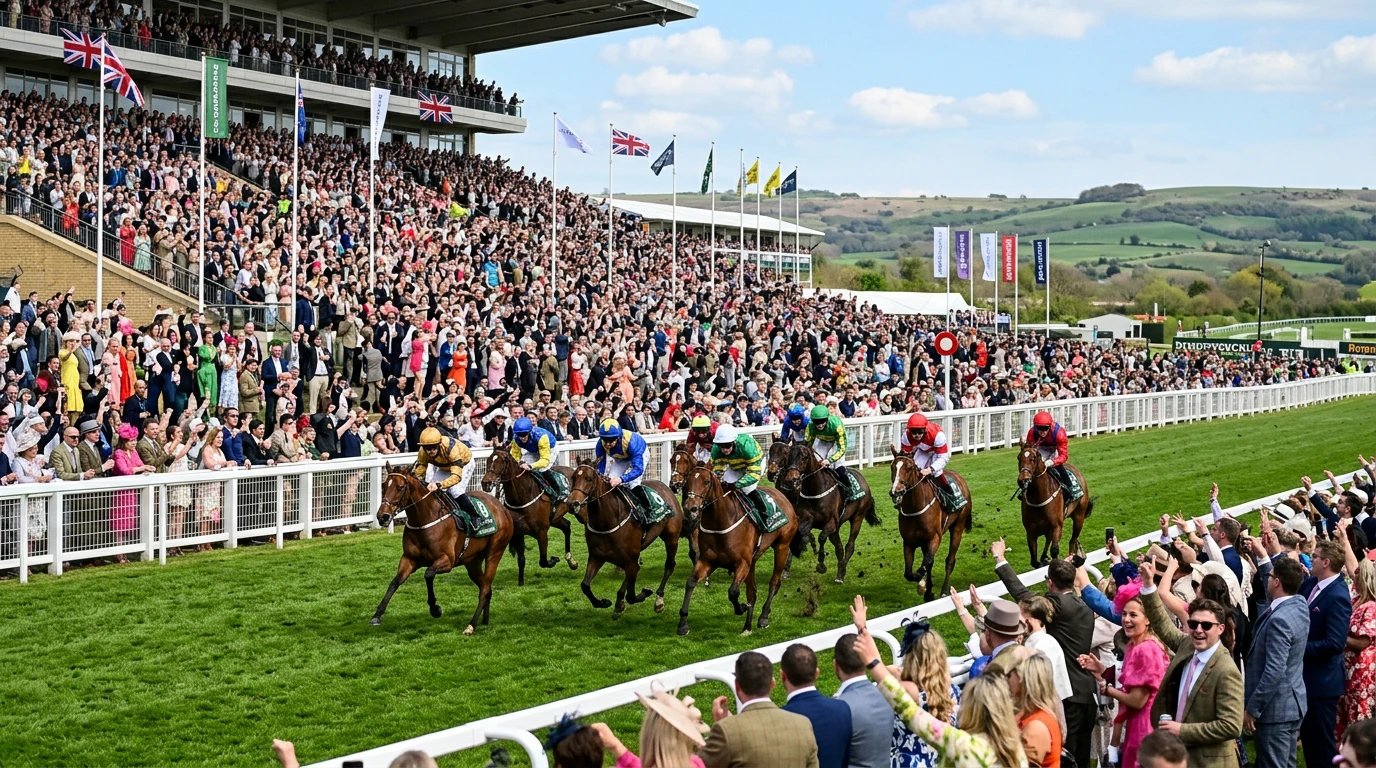
The Cheltenham Festival in March is the anchor of the National Hunt calendar. Four days, twenty-eight races, and the highest concentration of class, cash and punter emotion in the racing year. Markets begin forming months in advance, and the casual influx on Gold Cup Day reshapes the betting landscape for that single afternoon.
Aintree follows two weeks later, climaxing with the Grand National — the most-bet-upon race in Britain. Millions of once-a-year punters distort the market in ways experienced bettors can exploit: favourites are underbet relative to their true chance, longshots are overbet because they look exciting. The place terms on the National are among the most generous of the year, typically paying six or more places in a forty-runner field.
Royal Ascot in June shifts the action to the Flat. Five days of Group 1 racing with ITV's free-to-air coverage ensuring a mass audience — and the 2027–2030 renewal guaranteeing that access continues. The Epsom Derby on the first Saturday of June completes the quartet: the supreme test of the three-year-old thoroughbred, run over a unique undulating mile-and-a-half course. Derby markets are shaped by trial races from April onwards, making the ante-post market one of the most actively traded of the year.
Beyond the big four, significant betting action concentrates around the Guineas at Newmarket, Glorious Goodwood, the Ebor Festival at York and Champions Day at Ascot. Each carries its own market characteristics, and understanding them is part of the festival-by-festival betting approach that separates prepared punters from hopeful ones.
What unites these events from a betting perspective is volume. When 68% of ticket buyers at UK racecourses in 2025 were casual or first-time attendees, casual money clusters around short-priced favourites and eye-catching outsiders, leaving the 5/1 to 10/1 range — where much of the genuine value sits — relatively undisturbed.
Why the industry matters: jobs, levy and the wider economy
Every time I visit a small National Hunt yard in the Cotswolds, I am reminded that horse racing is not just a vehicle for betting. It is an agricultural industry, a rural employer and a cultural institution that pre-dates every other major sport in Britain.
British horse racing contributes a total of 4.1 billion pounds to the UK economy when indirect effects are included. The workforce spans stable staff, trainers, jockeys, racecourse operators and the breeding sector.
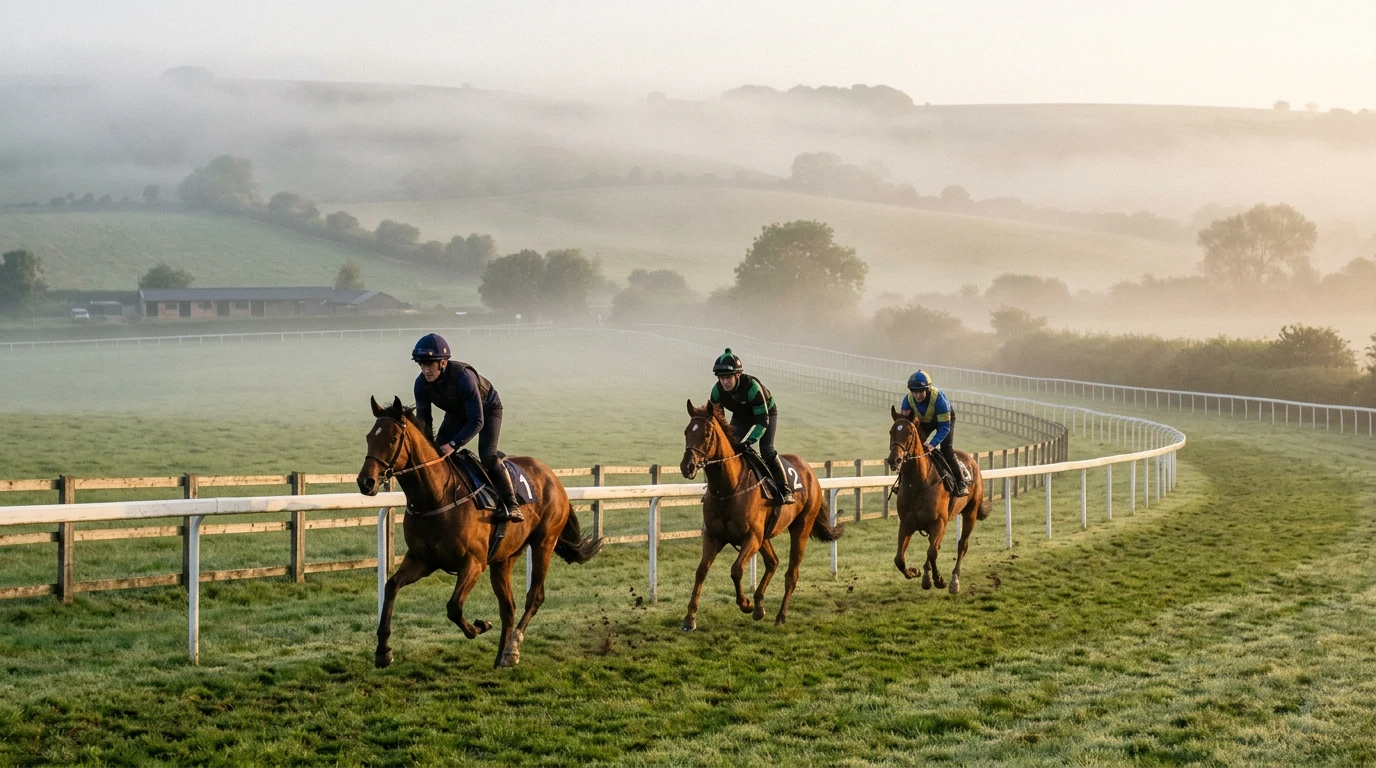
The funding link between betting and racing runs through the Horserace Betting Levy — 10% of bookmakers' gross profits from British racing flows to prize funds, racecourse infrastructure, breeding incentives and veterinary science. Levy income reached a record 109 million pounds in 2024–2025, though the Board forecasts 103 million pounds for 2025–2026 as margins normalise. Meanwhile, the racehorse population continues to shrink — down 1.9% in early 2025 to 15,070 horses in training. Fewer horses mean smaller fields, lower betting interest, reduced turnover and less levy income: a cycle the industry has not yet broken.
Brant Dunshea, the BHA's chief executive, has framed it plainly: racing has been part of the British way of life for hundreds of years, binding communities together, bringing joy to millions and putting the country on the world stage. Cheltenham Festival, Royal Ascot and the Grand National are global events that project British culture and attract international investment. When over 400 industry leaders signed an open letter warning that proposed regulatory changes would do lasting damage to an industry providing 85,000 jobs and contributing over 4 billion pounds to the economy, the claim was grounded in audited figures.
Total prize money across the first nine months of 2025 reached 153 million pounds — a 4.7-million-pound increase on the same period the previous year, flowing directly to owners, trainers, jockeys and stable staff.
Understanding that your ten-pound each-way bet contributes, however marginally, to a levy that funds veterinary research and supports rural employment puts the act of punting in a context most betting guides ignore.
The 2026 outlook: tax reform, AI and changing punter habits
If you had told me five years ago that the biggest threat to my betting experience would come from the regulator rather than the bookmakers, I would have been sceptical. The 2026 landscape is shaped by three forces — tax reform, artificial intelligence and a generational shift in punter behaviour — each moving fast enough to change the game within twelve months.
The tax story is the most immediate. Remote Gaming Duty jumps from 21% to 40% in April 2026, nearly doubling the effective tax rate on online casino products. General Betting Duty rises from 15% to 25% from April 2027, though horse racing's exemption — it stays at 15% — provides a crucial buffer. Operators facing higher tax burdens will look to recover margins through tighter odds, reduced promotional spend or more aggressive account management.
Dunshea did not mince words after the government confirmed no change to the 10% levy rate following a three-year review, calling it disappointing and noting that racing had provided clear evidence of a growing gap between costs and returns from betting. The levy decision combined with tax increases creates a double squeeze on the sport's finances.
The AI story is quieter but potentially more transformative. Machine-learning models that process thousands of data points — sectional times, going changes, trainer patterns, market movements — are becoming accessible to retail punters. The BHA noted 17% year-on-year growth in online racing betting during 2024, partly driven by AI-powered predictive tools and mobile platforms. The edge these models provide is real but narrow, and it is narrowing further as adoption increases. When everyone has the same model, nobody has an edge.
The most important number for 2026: 68% of surveyed UK bettors said in February 2026 that they planned to increase their betting activity over the coming year. Whether those intentions translate into licensed-market activity or leak further into unlicensed channels will define the next phase of British racing's financial health.
For punters, the practical takeaway is that 2026 rewards discipline more than any recent year. Margins will be tighter, promotions leaner, affordability checks more widespread. The punters who thrive will treat betting as a skill-based activity backed by data, staking plans and clear boundaries.
Frequently asked questions
Is online horse racing betting legal in the UK in 2026?
Yes. Online horse racing betting is fully legal for anyone aged eighteen or over, provided you use a UKGC-licensed operator. The Gambling Act 2005 established the framework, and no pending legislation changes the fundamental legality. What has changed is the intensity of regulation around how operators manage customer accounts — identity verification, affordability checks and responsible-gambling tools are all more prominent. The legal status of your bet depends entirely on whether your chosen operator holds a valid UKGC licence.
How do horse racing odds work, and what is the difference between fractional and decimal pricing?
Fractional odds express profit relative to stake: at 5/1, a one-pound stake returns five pounds profit plus your pound back. Decimal odds express total return per unit staked: 5/1 fractional equals 6.00 decimal. To convert, divide the first number by the second and add 1. You can calculate implied probability from decimal odds by dividing 1 by the decimal figure and multiplying by 100 — a horse at 6.00 carries an implied probability of 16.7%.
What is Best Odds Guaranteed and which bookmakers offer it?
Best Odds Guaranteed pays you at whichever price is higher — your fixed early price or the Starting Price. If you back a horse at 5/1 in the morning and the SP is 7/1, you receive 7/1. Most major UK-licensed operators offer BOG on domestic racing, though timing windows vary. BOG is free and activates automatically. Coverage and restrictions differ between operators, so check the specific terms on each race.
What is an each-way bet, and which UK races are best suited to it?
An each-way bet is two bets in one: a win part and a place part at equal stakes. If the horse wins, both pay. If it places, only the place part pays at a fraction of the win odds. Each-way works best in large-field handicaps (sixteen-plus runners) where place terms are generous and prices are long enough for the place return to cover your total outlay. In small fields, each-way is rarely good value.
How do UK affordability checks work, and will they affect casual bettors?
Affordability checks are financial risk assessments operators carry out when spending hits certain thresholds. Light-touch checks use soft credit data; enhanced checks may require payslips or bank statements. Casual bettors staking modest amounts are unlikely to trigger enhanced checks, though the proportion of surveyed punters who have undergone some form of check rose from 16.6% in 2023 to 23.7% in 2025.
What is the safest way to deposit and withdraw at a UK racing bookmaker?
Use a UKGC-licensed operator and a payment method linked to your verified identity. Debit cards are the most widely supported option since the credit card ban in April 2020. E-wallets provide an additional layer of separation between your bank and betting accounts. Avoid any platform accepting credit cards or cryptocurrency — these are strong indicators of an unlicensed operation.
Which UK racing fixtures form the must-watch calendar through the year?
The big four are Cheltenham Festival (March), the Grand National at Aintree (April), Royal Ascot (June) and the Epsom Derby (early June). Beyond those, the Guineas at Newmarket, Glorious Goodwood, the Ebor Festival at York and Champions Day at Ascot attract significant volume. ITV's free-to-air deal covers the major festivals.
Betting with intent in a shifting landscape
Nine years of analysing UK horse racing markets have taught me one thing above all: the punters who survive treat betting as a discipline, not a hobby. In 2026, with the regulatory environment tightening, the tax burden rising and the gap between legal and illegal markets widening, that carries more weight than ever.
The data tells a story of an industry in transition. Horse racing remains the second-largest sport in Britain, still generating hundreds of millions in GGY, still attracting over five million spectators. But turnover is declining, field sizes are shrinking, and the black market is growing at five times the rate of the licensed sector. These trends affect the odds you are offered, the promotions available to you and the long-term viability of the sport you bet on.
The edge in 2026 belongs to punters who understand what they are betting on, who they are betting with and why the numbers look the way they do. Process beats impulse. Data beats opinion. And a verified UKGC licence is the foundation everything else sits on.
Whether you are studying form for a Saturday handicap or placing a five-pound each-way shot at the Cheltenham Festival, the principles hold: check the going, read the card, compare the odds, set your limits and bet with intent. The framework above gives you the tools. The rest is practice — and the occasional stroke of luck that keeps us all coming back.
Prepared by the bethorseracingonline.com editorial staff.
.