
Horse Racing Pace Analysis: Reading the Shape of a UK Race
 Available in US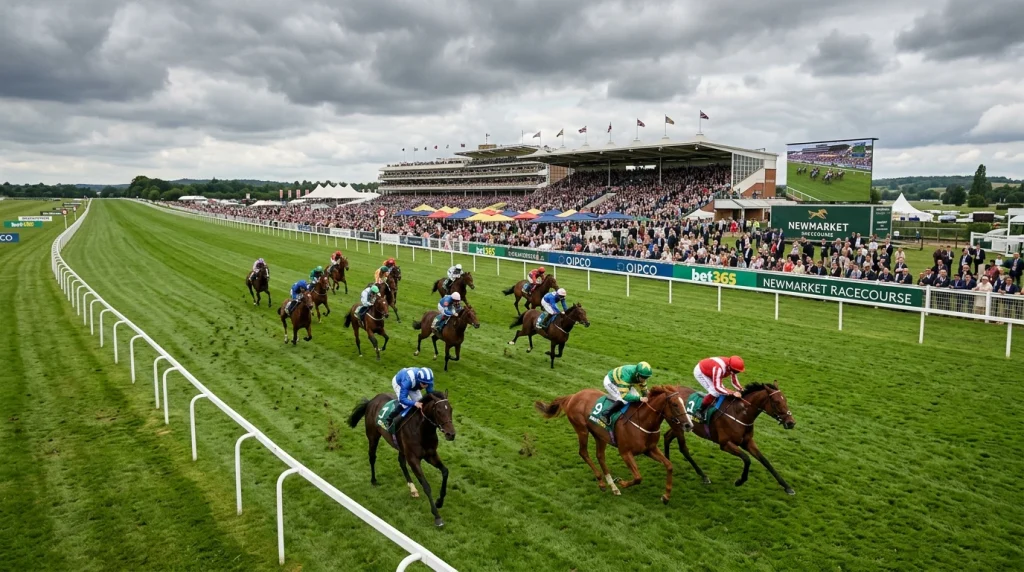
Contents
Why pace often decides who wins
Two horses can have identical form figures, identical official ratings, and identical ground preferences – and the one that gets the right pace scenario will beat the other by three lengths. Pace is the invisible variable that most casual punters ignore entirely, and it is the variable that I’ve found adds more predictive power to my assessments than any other single factor beyond raw form.
Pace analysis is not about predicting exact fractions or sectional times. In UK racing, sectional data is still developing compared to the mature datasets available in the United States or Australia. What pace analysis does for the UK punter is map the likely shape of a race – who leads, how fast they go, whether the pace is genuine or tactical – and assess which running styles that shape favours. Getting this right, even approximately, shifts the probability estimates on multiple runners in the field.
The four running styles
UK racing commentators and form books loosely categorise horses into four running styles, though most horses are flexible enough to adopt more than one. Front-runners lead from the start and attempt to sustain their advantage to the line. Prominent racers sit just behind the leader, in second or third, and make their move entering the straight. Mid-division runners settle in the middle of the field and rely on a sustained run through the pack. Hold-up horses are ridden at the back of the field and produce a late charge in the final two furlongs.
Each style has structural advantages and vulnerabilities, and those shift depending on the pace of the race. In a genuinely fast-run race, front-runners tire and hold-up horses benefit from the energy spent by those ahead of them. In a slowly run tactical affair, front-runners can steal the race by kicking clear before the closers engage, while hold-up horses find themselves with too much ground to make up in too short a distance.
The BHA’s fixture list for 2026 includes 1,458 meetings, and the pace dynamics at each one are shaped by the specific combination of runners, the track configuration, and the distance. A seven-furlong race at Chester, with its tight turns, produces entirely different pace patterns from a seven-furlong race at Newmarket’s wide, straight July Course. Applying a one-size-fits-all pace framework without adjusting for the track is a common analytical error.
Building a pace map for a UK race
A pace map is a pre-race assessment of how the field is likely to shape up in the early stages. Building one requires checking each runner’s recent races for its typical running position – information available on most racecard services and form databases. I look specifically for the position at the first or second timing point, which tells me whether a horse was held up, prominent, or leading.
The key question is not just which horses lead but how many of them want to lead. If two or three confirmed front-runners are drawn together in a sprint, the pace is likely to be strong because they will compete for the lead rather than settling behind each other. If only one front-runner is in the field and no other horse has shown early speed, the pace is likely to be steady, and that lone leader can dictate terms.
Average field sizes dropped to 8.90 on the Flat and 7.84 over jumps in 2026. Smaller fields reduce the probability of multiple speed horses in the same race, which tilts the pace map towards slower, more tactical races. In a six-runner conditions race with one front-runner, the default expectation is a steadily run race that favours the leader – a structurally different scenario from a 16-runner handicap where three confirmed front-runners ensure a genuine gallop.
I record my pace maps in a simple format: F (likely front-runner), P (likely prominent), M (mid-division), H (likely hold-up). Scanning the field and assigning a letter to each runner takes two or three minutes and immediately highlights whether the race is likely to be fast or slow, and whether the shape favours closers or leaders.
The lone-leader phenomenon
One of the most reliable pace-based angles in UK racing is the lone leader. When a single horse has clear early speed and no rival is likely to contest the lead, that horse controls the race from the front. It dictates the tempo, gets a breather on the bend or in the middle of the race, and kicks for home when the jockey chooses – not when the pace forces it.
Lone leaders in UK handicaps win at a rate noticeably above their market-implied probability, particularly at distances from seven furlongs to a mile and a quarter. The advantage is most pronounced at tracks with long home straights, where the leader can build a gap that closers struggle to bridge even with a strong finish.
The market does price in lone-leader status to some extent – a horse that is expected to lead often shortens on the morning of the race. But the market adjustment is typically insufficient, especially in larger fields where the crowd’s attention is split across many runners. Identifying the lone leader before the market does, or recognising when the market has not fully priced in the pace advantage, is one of the more consistent edges I’ve found in Flat handicaps.
Translating pace reads into bets
The practical application of pace analysis is not about backing every front-runner. It is about adjusting your probability estimates for each horse based on the expected pace scenario, and then comparing those adjusted estimates against the market’s implied probabilities.
If my form analysis gives a hold-up horse a 15% chance of winning but the pace map suggests a slowly run race that disadvantages closers, I might adjust that estimate down to 10%. If the market is pricing the horse at 12% implied probability (roughly 7/1), the bet becomes negative expected value and I pass. Conversely, if the pace map suggests a strongly run race that favours closers, I might adjust the same horse’s estimate up to 18% – and if the market price implies 12%, the bet is clear value.
The adjustment is not precise arithmetic. I don’t pretend to calculate pace effects to two decimal places. What I do is apply a directional modifier – up or down – based on whether the expected pace scenario helps or hurts each runner. Over hundreds of bets, that directional adjustment produces a measurable improvement in the accuracy of my probability estimates compared to form-only analysis.
One final point: pace analysis is most valuable in races with genuine uncertainty about the pace scenario. In a race with five confirmed front-runners, the pace will be fast – that is not a difficult read, and the market will have priced it in. The highest-value pace reads come in races where the pace outcome is ambiguous – where a front-runner might or might not get the lead, where the draw might create pace on one side of the track but not the other, where a jockey booking change suggests a change of tactics. Those are the races where doing the work produces the edge.
Pace FAQ
Articles
Created by the "bethorseracingonline.com" editorial team.
