
The UK Horse Racing Handicap System: How Marks Are Set and Why They Move
 Available in US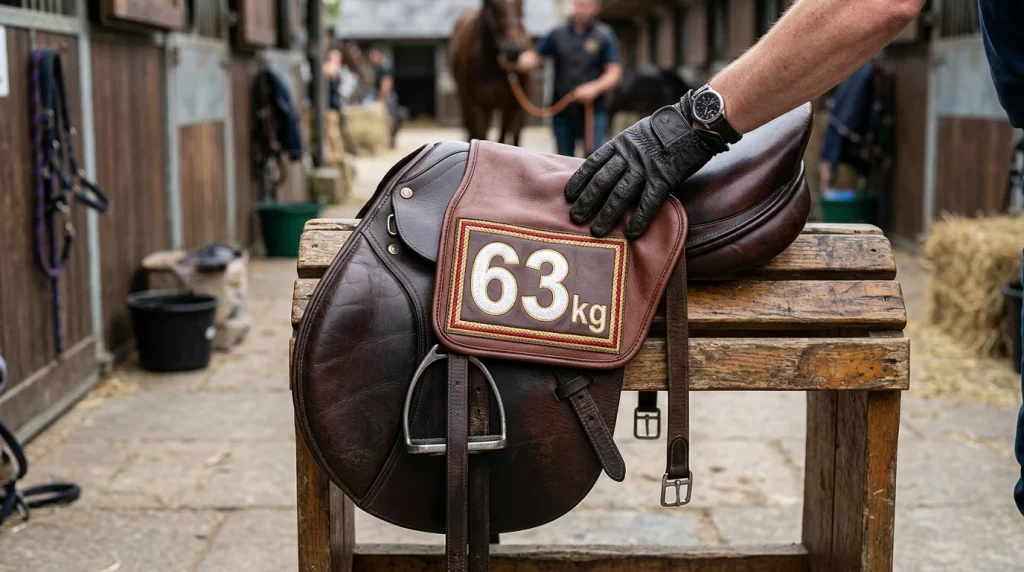
Contents
The handicap idea: equalising the field on paper
Handicap racing is built on a beautifully simple premise: if you give every horse the correct weight to carry, they should all cross the line at the same time. The reality, of course, is nothing like that – which is exactly what makes handicaps the most fascinating betting medium in British racing. The gap between the handicapper’s assessment and the horse’s actual ability on the day is where every shilling of value lives.
Handicaps account for the majority of races on the UK calendar, and they dominate the big-field betting opportunities that punters gravitate towards. A Saturday card at a major track will typically feature three or four handicaps alongside the conditions and Group races, and it’s the handicaps that consistently attract the largest fields and the deepest betting markets. Betting turnover on UK racing dropped 9% in the first quarter of 2026, but handicap races remained the format with the highest per-race engagement.
How official ratings are derived
The BHA employs a team of professional handicappers whose job is to assign and maintain an official rating for every horse in training that has run at least three times. The rating is expressed as a number – typically ranging from 0 to around 130 for Flat horses and slightly lower for jumpers – that represents the handicapper’s assessment of the horse’s ability.
New ratings are assigned after a horse’s third run, using the form of those three races to estimate ability. The handicapper considers finishing positions, distances beaten, the quality of the opposition, and the conditions of each race. The initial rating is inherently an estimate, and some horses are rated accurately from the outset while others are assessed too high or too low. That inaccuracy is what creates betting opportunities in early-career handicaps.
Nevin Truesdale, the former Jockey Club chief executive, has argued that the regulatory environment risks undermining gambling by imposing friction at every stage. That friction extends to the handicapping system in an indirect way: as field sizes shrink and fewer horses compete, the handicapper has less data to work with when assessing relative ability. Average Flat field sizes dropped to 8.90 runners in 2026 from 9.14 the year before, and each reduction makes the handicapper’s task slightly less precise.
Weight allocation and the bottom-weight effect
In a handicap, the top-rated horse carries the most weight and the lowest-rated horse carries the least. The weight range is defined by the race conditions – a typical handicap might have a top weight of 10 stone and a bottom weight of 8 stone 7 pounds, with every horse in between carrying a weight that corresponds to its rating relative to the top weight.
The bottom-weight effect is a phenomenon that experienced punters watch for. In a competitive handicap, the horse at the bottom of the weights is the one the handicapper rates lowest in the field. But low rating does not mean low ability in every case. A horse dropping down in class from a higher-rated race, or one returning from a break with its mark unchanged while its fitness improves, can be well treated at the bottom of the weights.
There is also a practical advantage to carrying less weight. Jockeys riding at lighter weights are often more effective in a finish because they can push and ride with less physical burden. The difference between 8 stone 7 and 10 stone is 21 pounds – the equivalent of carrying a heavy rucksack over a mile and a half at full gallop. That weight differential is enough to affect the outcome of a close finish, which is why the bottom-weight effect is real and measurable across a large sample of races.
How marks move after a run
After every race, the handicapper reviews each horse’s performance and decides whether to adjust its rating. A decisive win typically results in a rating increase; a poor run may result in a decrease, though handicappers are cautious about lowering marks too quickly in case the poor run was caused by a temporary factor like unsuitable ground or a bad draw.
The size of the adjustment depends on the margin of victory and the perceived quality of the race. A horse that wins a Class 2 handicap at York by three lengths will receive a larger rating increase than one that wins a Class 5 handicap at Wolverhampton by a nose, because the handicapper infers a greater level of improvement from the former performance.
This is where the form reader’s advantage comes in. The handicapper can only react to what happened; the punter can anticipate what might happen next. If you identify a horse that won a Class 5 with something in hand – eased down by the jockey near the line, finishing well within itself – the handicapper may raise the mark by only 3 or 4 pounds, whereas the horse may have 7 or 8 pounds of improvement in hand. That gap between the handicapper’s conservative adjustment and your assessment of the horse’s true ability is the essence of handicap betting value.
Ratings also move for horses that don’t win. A horse that runs a close second to a subsequent winner may be raised a pound or two. A horse that finishes in the first four in a competitive handicap may hold its mark or receive a minor adjustment. Consistent placed form without winning is the profile of a horse that is correctly handicapped – neither too high nor too low – which makes it a poor value proposition for win bettors but potentially attractive for each-way punters.
What it means for value
The handicap system creates a unique ecosystem for value betting. Unlike conditions races, where the best horse usually wins and the odds are short, handicaps are designed to produce competitive finishes where any of several horses could win. The bookmaker’s overround is spread across a larger field, and the market’s assessment of each runner’s chance is more likely to contain errors because the variables are more numerous.
The best handicap bets target horses whose marks are about to change. A horse that has improved since its last run but hasn’t yet been reassessed runs off its old, lower mark – effectively carrying less weight than its current ability warrants. Identifying these horses before the market does is the most repeatable edge in handicap betting.
Conversely, the worst handicap bets are on horses whose marks have just been raised significantly after a big win. The market often underestimates the impact of a 6 or 7 pound rise, pricing the horse as if it can repeat the victory at the same level. In practice, the raised mark means it is now competing against horses that are closer to its ability – and the competitive advantage it held at the lower mark has been eroded or eliminated.
Handicap FAQ
Articles
Prepared by the bethorseracingonline.com editorial staff.
