
Non-Runner No Bet Rules in UK Horse Racing: When You Get Your Stake Back
 Available in US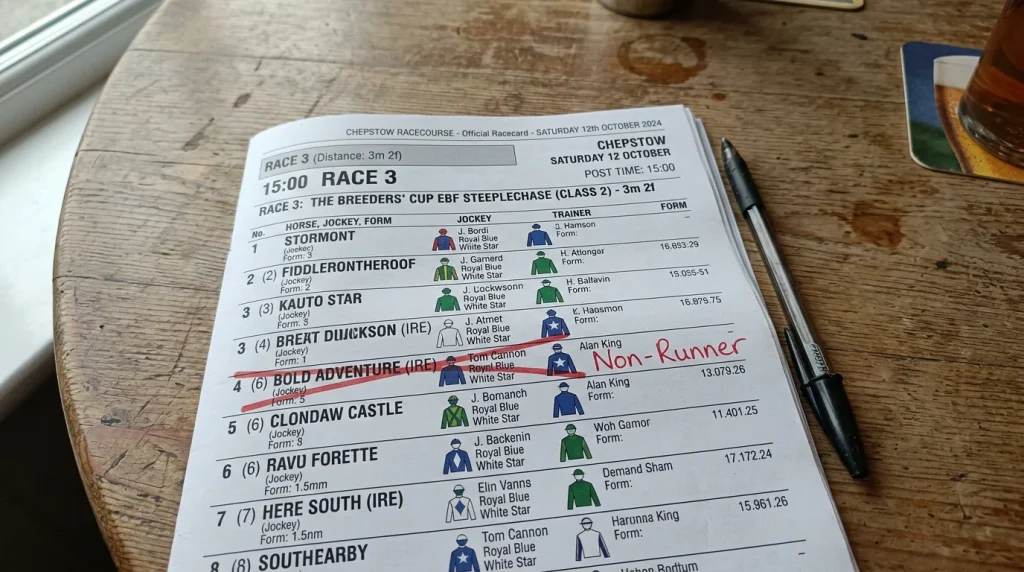
Contents
What NRNB really protects you against
The first time I lost a bet to a non-runner I hadn’t even considered the possibility. I backed a horse in an ante-post market for the King George, it picked up an injury in December, and my stake was gone – no refund, no replacement, just a voided selection and a depleted bank. That experience taught me to read the small print before placing any bet where a non-runner could wipe out my position without warning. Non-runner no bet, universally abbreviated to NRNB, is the promotional term bookmakers use when they agree to refund your stake if your selection doesn’t run. It sounds simple, but the details of when it applies, when it doesn’t, and how it interacts with other settlement rules are worth understanding properly.
NRNB versus standard ante-post rules
On race day, NRNB is the default. If you back a horse in the morning and it is withdrawn before the race, your stake is returned. This is standard practice across all UKGC-licensed bookmakers and is built into the terms of every race-day market. You don’t need to look for an NRNB label on race-day bets – it applies automatically.
The distinction matters for ante-post markets. Standard ante-post terms are “all in, run or not” – if your horse doesn’t make the race for any reason, you lose your stake. NRNB ante-post markets are a separate promotional category where the bookmaker explicitly agrees to refund stakes on non-runners. These markets typically offer shorter prices than the standard ante-post market for the same race, because the bookmaker is absorbing the non-runner risk that would otherwise sit with the punter.
Win bets account for 36% of the UK horse racing betting market, and the NRNB distinction affects win bets, place bets, and each-way bets alike. A punter who doesn’t check whether an ante-post market carries NRNB terms is making a fundamental error about the risk profile of the wager.
Rule 4 deductions explained
When a horse is withdrawn from a race after the final declarations stage – the point at which the market has been formed and bets have been struck – the remaining runners’ odds must be adjusted to reflect the reduced field. Rule 4, named after the fourth rule of Tattersalls’ Rules on Betting, provides a schedule of deductions that bookmakers apply to winning bets to account for the removal of a competitor.
The deduction is expressed in pence per pound and is determined by the withdrawn horse’s price at the time of withdrawal. A horse withdrawn at odds of evens triggers a 45p deduction – meaning a winning bet is settled at 55% of the original price. A horse withdrawn at 9/2 triggers a 15p deduction. The shorter the price of the withdrawn horse, the larger the deduction, because a fancied runner’s removal gives every remaining horse a greater chance of winning.
Multiple withdrawals compound. If two horses are withdrawn, each triggering separate Rule 4 deductions, the deductions are applied sequentially to the remaining prices. Betting turnover on UK racing fell 9% in the first quarter of 2026, and races with multiple withdrawals – which produce compounded Rule 4 deductions – are one of the friction points that frustrate punters, particularly when the deductions reduce a winning payout by 20% or more from the price taken.
The critical point for punters is that Rule 4 applies to bets already placed, not to new bets struck after the withdrawal. If you back a horse at 8/1 in the morning and a rival is withdrawn an hour before the race, your winning payout will be reduced by the applicable Rule 4 deduction. If you wait until after the withdrawal to place your bet, the market will have already adjusted and no Rule 4 applies – but the price you get will be shorter to reflect the reduced field.
What NRNB and Rule 4 do to each-way bets
Each-way bets interact with non-runners and Rule 4 in ways that catch out even experienced punters. When a horse is withdrawn from a race, the each-way place terms may change. A 16-runner handicap paying four places becomes a 15-runner handicap still paying four places if one horse is withdrawn – but if three horses are withdrawn, dropping the field to 13, the number of paid places may reduce from four to three, depending on the bookmaker’s rules and the field-size thresholds.
Rule 4 deductions apply to both the win and place parts of an each-way bet. If a rival is withdrawn at odds that trigger a 20p Rule 4, your winning each-way bet has both the win return and the place return reduced by 20p in the pound. The compounding effect on an each-way bet is more noticeable than on a straight win bet because two separate calculations are being reduced.
NRNB protection on each-way bets works as you would expect: if your horse is a non-runner and the market carries NRNB terms, the full each-way stake – both the win and place portions – is refunded. If a different horse is a non-runner, your bet stands but is subject to Rule 4 deductions on any winning payout.
Which UK markets typically come with NRNB
NRNB is most commonly offered on ante-post markets for the biggest races in the calendar. The Grand National, the Cheltenham Gold Cup, the Champion Hurdle, the Derby, and the King George are races where most major bookmakers will offer an NRNB ante-post market alongside the standard all-in market. The NRNB market always has shorter prices – typically 15-30% shorter than the standard ante-post market – reflecting the value of the non-runner protection.
Some bookmakers extend NRNB to selected race-day specials, particularly outright betting markets on multi-race competitions like the Cheltenham Festival top trainer or top jockey. In these markets, a participant who doesn’t attend the meeting would normally be settled as a loser under standard terms, but NRNB provisions return the stake.
Day-of-race betting on individual races carries NRNB as standard – this is the default position and does not need to be specifically advertised. The promotional significance of the NRNB label applies only to markets where stakes would otherwise be lost on non-runners, which means ante-post and outright markets. If you see NRNB advertised on a race-day market, it is marketing rather than a genuine additional benefit – you would get your stake back on a race-day non-runner regardless.
NRNB FAQ
Articles
Prepared by the bethorseracingonline.com editorial staff.
